
Best Time to Landscape in Minnesota by Season and Project Type
Minnesota gives homeowners a short but productive window for outdoor improvements. Snow, frost, spring rain, summer heat, and fall freeze dates all affect when crews can grade soil, pour concrete, install sod, spread mulch, plant shrubs, or fix drainage problems.
The good news is that nearly every landscape project has an ideal season. The key is matching the work to the weather, soil conditions, and how much time new grass or plants need to establish before winter.

The Minnesota landscaping season starts before the first shovel hits the ground
The active Minnesota landscaping season usually begins in spring once the ground thaws and soil can be worked. In many years, that means April or May for lighter work and later spring for heavier equipment, grading, sod, and concrete. Weather can shift that window by several weeks.
Planning should start earlier. If a project needs design, drainage evaluation, material selection, permits, or multiple phases, winter and early spring are not too soon to contact a landscaping contractor MN homeowners trust.
A simple timing guide looks like this:
Season | Best projects | Watch for |
Spring | Cleanup, mulch, rock, grading, drainage, planting, sod, prep for renovations | Wet soil, late frost, contractor availability |
Summer | Concrete, patios, rock, mulch, boulder walls, grading, irrigation coordination, sod with watering | Heat stress, watering needs, dry soil |
Fall | Sod, hydroseeding, plantings, drainage, grading, landscape renovation, winter prep | Early frost, shorter workdays, end-of-season scheduling |
Winter | Planning, quotes, design decisions, material selection | Work is limited, but planning gives a head start |
That makes the Best Time to Landscape in Minnesota less about one perfect month and more about choosing the right season for the type of work.
Spring works well for cleanup, mulch, grading, drainage, and early planting
Spring landscaping MN projects often start with cleanup and reset work. Snowmelt reveals compacted soil, washed-out mulch, damaged edging, low spots, and drainage issues that were hidden all winter.
Spring is a strong time for:
Fresh landscape bed edging
Mulch installation
Decorative rock installation
Drainage corrections
Rough or finish grading
Lawn repair
Early sod installation
Shrub and perennial planting
Prep work for larger summer projects
The biggest spring challenge is moisture. Heavy equipment can rut soft lawns, and grading soil that is too wet can create clumps, compaction, and uneven settling. A good contractor will look at the soil, not just the calendar.
Rock and mulch installation in spring
Spring is one of the best times to install mulch or decorative rock because beds are visible and weeds have not taken over yet. Fresh mulch helps moderate soil temperature, hold moisture, and give landscape beds a finished look early in the season.
Decorative rock can also be installed in spring, especially in beds near foundations, around trees, along walkways, or in low-maintenance areas. For homes in Ramsey, Andover, Anoka, Blaine, Elk River, Otsego, Maple Grove, Champlin, Dayton, St. Michael, Coon Rapids, and Brooklyn Park, rock can be a practical choice where mulch washes out or needs frequent replacement.
For more details on bed materials, see Rock & Mulch.
Drainage and grading after snowmelt
Spring is also when drainage problems become obvious. Standing water, soggy lawn areas, pooling near the foundation, and washed-out beds are easier to diagnose after snowmelt and spring rain.
Drainage MN projects often involve:
Re-sloping soil away from the house
Correcting low spots
Installing drain tile or surface drains
Managing downspout discharge
Building swales
Preparing soil before sod or hydroseeding
If drainage is part of the project, finish it before installing sod, mulch, rock, or plantings. Water problems rarely get better when covered up.
Learn more about Drainage before starting finish work.
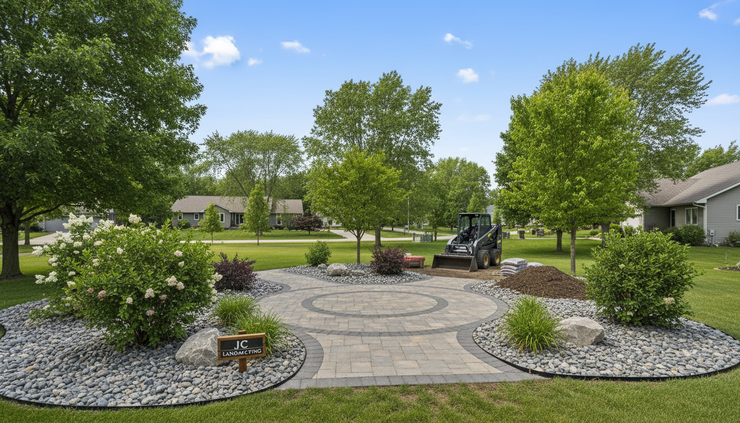
Summer is best for concrete, hardscape, boulder work, and larger installations
Summer gives crews longer days, warmer temperatures, and more predictable access to yards. It is often the best season for projects that need dry conditions and stable bases.
Common summer projects include:
Concrete patios, walkways, slabs, and aprons
Boulder walls
Decorative rock beds
Mulch refreshes
Landscape renovations
Yard grading
Retaining features
Sod installation with regular watering
Prep work for fall seeding
Summer is also when calendars fill up fast. If a homeowner wants a patio before a graduation party, a refreshed front yard before listing a home, or new sod before late summer, booking early matters.
Concrete needs the right temperatures and base prep
Concrete projects in Minnesota usually fit best from late spring through early fall. The ground should be workable, the base should be properly prepared, and freezing weather should not be close.
A quality concrete project depends on more than the pour day. Crews need time for excavation, base installation, form setup, slope planning, and cure conditions. If the concrete ties into a larger landscape renovation MN project, it should usually happen before final grading, sod, and planting.
Explore related services at Concrete.
Summer sod can work, but watering is critical
Sod installation MN projects can be done in summer, but heat raises the stakes. Fresh sod has shallow roots at installation, so it needs consistent water while it knits into the soil.
Summer sod is more successful when:
Soil is properly graded first
The lawn base is loose enough for rooting
Water is available right after installation
Foot traffic stays off the new lawn
The first mowing waits until the sod is rooted
If watering will be difficult during a hot stretch, spring or fall may be the better choice.
Fall is one of Minnesota’s best seasons for sod, hydroseeding, planting, and renovation
Fall landscaping MN projects have a major advantage. Cooler air reduces stress on turf and plants, while the soil often stays warm enough for roots to grow. That combination makes fall a strong season for lawns, plantings, and renovation work.
Fall is a good fit for:
Sod installation
Hydroseeding
Shrub and tree planting
Perennial planting
Landscape bed renovation
Drainage fixes
Final grading
Mulch touch-ups
Winter preparation
The main limit is frost. Once the ground starts freezing, grading, planting, sod rooting, and concrete work become harder or less reliable.

Best time for sod in Minnesota
The best time to install sod is usually spring or early fall. Fall often has the edge because cooler temperatures reduce heat stress, and regular rain may help with watering.
Sod needs enough time to root before winter. If it is installed too late, it may survive, but it will not establish as strongly before the ground freezes. The exact cutoff changes each year based on weather.
For full lawn replacement or new construction, start planning sod work as soon as grading is close to final. See Sod & Hydroseeding if a new lawn is part of the project.
Best time for hydroseeding in Minnesota
Hydroseeding works best when seed has warmth, moisture, and time to germinate. In Minnesota, that often means late spring through early summer or late summer into early fall.
Hydroseeding can be a good choice for:
Larger yards
New construction lawns
Sloped areas
Lawn repair after grading
Areas where erosion control matters
Fall hydroseeding should happen early enough for seed to germinate and establish before cold weather. If the project runs late, sod may be a better option for immediate coverage.
Fall planting gives roots a head start
Trees, shrubs, and perennials often do well in fall because the cooler weather lowers water stress. Roots can continue developing while top growth slows down.
Fall planting works best when plants still have time to settle in before hard freezes. Mulch can help protect roots, conserve moisture, and reduce freeze-thaw stress around new plantings.
Match each project type to the right window
Every project has its own timing. A patio and a native plant bed are not on the same schedule. Neither are drainage correction and decorative rock installation.
Project type | Best timing in Minnesota | Why it works |
Mulch | Spring through fall | Spring gives beds a clean start, fall protects roots |
Decorative rock | Spring through fall | Works well once beds are prepared and soil is accessible |
Planting | Spring and fall | Cooler weather reduces stress on plants |
Sod | Spring and early fall | Temperatures are milder and rooting conditions are better |
Hydroseeding | Late spring or early fall | Seed needs warmth, moisture, and establishment time |
Grading | Spring through fall when soil is workable | Soil should not be frozen or overly saturated |
Drainage | Spring through fall | Best completed before finish materials |
Concrete | Late spring through early fall | Base prep and curing need suitable weather |
Boulder walls | Spring through fall | Equipment access and stable soil matter |
Full renovation | Spring through fall, planned early | Multiple project phases need proper order |
A full landscape renovation often follows this order:
Evaluate drainage and grades.
Remove old material, failing turf, or overgrown plantings.
Complete excavation, base work, grading, and utilities.
Install concrete, walls, boulders, rock, or edging.
Add soil amendments and final grading.
Install plants, mulch, sod, or hydroseed.
That order prevents rework. It also protects finished surfaces from heavy equipment.
Preparing landscaping before winter protects the investment
Late fall is not just the end of the season. It is the time to protect what was installed and prepare the yard for freeze-thaw cycles.
Before winter, focus on:
Watering new sod, trees, and shrubs until the ground freezes
Cleaning leaves off new turf
Adding mulch around vulnerable plants
Checking that downspouts drain away from the foundation
Making sure soil slopes away from the house
Removing debris from drains and swales
Avoiding heavy traffic on newly installed sod
Drainage is especially important before winter. Water that pools near patios, walkways, foundations, or low lawn areas can freeze, expand, and create problems by spring.

Why booking ahead matters
Landscaping in Minnesota is seasonal, so contractor schedules can fill quickly. Spring demand spikes as soon as snow melts. Summer schedules often book out with patios, concrete, sod, boulder walls, and larger installs. Fall fills with homeowners trying to finish projects before winter.
Booking ahead helps with:
Getting a better project window
Allowing time for design and material choices
Coordinating grading, concrete, sod, and planting in the right order
Avoiding rushed decisions
Completing drainage work before finish materials go in
Giving new turf or plants time to establish
For larger projects, it is smart to reach out weeks or months before the preferred installation window. Even smaller projects like mulch, rock, or sod are easier to schedule before peak season demand hits.
JC Landscaping LLC provides Landscaping Services, rock, mulch, sod, hydroseeding, grading, drainage, concrete, boulder walls, and more throughout Ramsey, Andover, Anoka, Blaine, Elk River, Otsego, Maple Grove, Champlin, Dayton, St. Michael, Coon Rapids, Brooklyn Park, and surrounding areas.
Frequently asked questions
What month should landscaping start in Minnesota?
Many landscaping projects begin in April or May once the ground thaws and soil conditions allow work. Larger grading, sod, and concrete projects may need to wait until the ground is firm and workable.
Is spring or fall better for landscaping?
Spring is great for cleanup, mulch, rock, drainage, grading, and early planting. Fall is often better for sod, hydroseeding, many plantings, and renovation work because temperatures are cooler.
How late in the year can you landscape in Minnesota?
Some work can continue into late fall if the ground is not frozen. Sod, planting, grading, and concrete become harder as frost arrives, so timing depends on the weather that year.
What is the best time to install sod?
Spring and early fall are usually best. Early fall is often ideal because the air is cooler, soil is still warm, and new sod has less heat stress.
When should you hydroseed in Minnesota?
Hydroseeding is usually best in late spring through early summer or late summer into early fall. Seed needs warmth, moisture, and enough time to establish before winter.
Can drainage and grading be done in the fall?
Yes, drainage and grading can often be done in fall if the soil is not frozen or too wet. Fall can be a smart time to fix water problems before snow and spring melt.
When should I book a landscaping contractor?
Book as early as possible, especially for spring and summer projects. For bigger jobs involving grading, drainage, concrete, sod, or full renovation, start planning months ahead when possible.
The best season depends on the project
For Minnesota homes, there is no single perfect landscaping month. Spring is ideal for cleanup, mulch, rock, drainage, grading, and early planting. Summer works well for concrete, boulder walls, hardscape, and larger installations. Fall is one of the best times for sod, hydroseeding, planting, and preparing the yard before winter.
The right plan starts with the work that affects everything else, especially grading and drainage. Once the base is right, the finish materials last longer, the lawn performs better, and the yard is easier to maintain.


Comments