
Sod Installation and Hydroseeding in Elk River MN
A healthy lawn starts long before the grass turns green. In Elk River, where yards deal with freeze-thaw cycles, spring runoff, sandy pockets, clay-heavy areas, and summer dry spells, the way a lawn is installed matters just as much as the seed or sod itself.
For homeowners and property owners planning a new lawn Elk River MN project, two of the most common options are sod installation and hydroseeding. Both can create a thick, usable lawn, but they work best in different situations. Sod gives you an instant lawn surface. Hydroseeding covers larger or more uneven areas with a seeded slurry designed to help grass establish from the soil up.
JC Landscaping provides sod installation and hydroseeding in Elk River, MN for new lawns, lawn renovations, grading projects, bare areas, and landscape restoration. The right choice depends on your timeline, property conditions, budget, watering plan, and how quickly you need the yard to be usable.

Sod and hydroseeding solve different lawn problems
Sod and hydroseeding both grow into turf, but they start in very different ways.
Sod is mature grass grown off-site, harvested in rolls, and installed over prepared soil. Once placed and watered correctly, it gives the yard an immediate green surface. It still needs time to root, but the visual change happens right away.
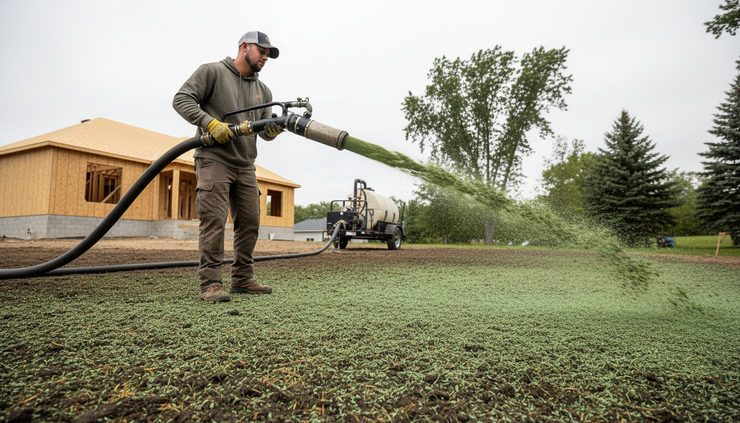
Hydroseeding uses a mixture of grass seed, mulch, fertilizer, water, and tackifier sprayed over prepared soil. The mulch helps protect the seed, hold moisture, and reduce erosion while the grass begins to germinate.
For many Elk River properties, the choice comes down to what the yard needs most.
Sod is often a strong fit when:
The front yard needs to look finished quickly
Bare soil is close to the house, driveway, or patio
Erosion control is needed on smaller, visible areas
The yard needs a clean edge along landscaping or hardscaping
A quicker usable surface is the main goal
Hydroseeding is often a strong fit when:
The area is large
The property has wide bare sections after grading
The slope or shape of the yard makes sod less practical
A more budget-conscious seeding option is preferred
The lawn has time to establish before heavy use
Neither option works well if the soil is ignored. The best results come from proper prep, grading, soil contact, watering, and aftercare.
Why soil preparation matters before any grass installation
Grass does not fix poor soil prep. It reveals it.
If the yard has low spots, compacted soil, construction debris, or drainage problems, new grass may struggle no matter how good the sod or seed mix is. That is why lawn installation Elk River MN projects often begin with evaluating the ground before any grass goes down.
A good lawn base should be:
Graded to move water away from structures
Loosened enough for root growth
Cleared of rocks, wood scraps, and surface debris
Smoothed without being packed too hard
Shaped to blend into driveways, patios, sidewalks, and beds
This is especially useful after home construction, utility work, driveway projects, patio installation, or major yard changes. If machines have compacted the soil, the future lawn may need more than a quick rake and seed.
JC Landscaping can support the steps that happen before grass installation, including Grading, Dirt Work, and related Landscaping work. For yards with standing water or soft areas, Drainage Solutions may need to be addressed before sod or hydroseed is installed.
A new lawn performs best when water has somewhere to go, roots have room to grow, and the surface is shaped before the grass is added.
Skipping prep can lead to thin grass, puddling, washouts, uneven mowing, and early lawn failure. Fixing those problems after the lawn is installed usually costs more than preparing the site correctly from the start.
When sod installation is the better choice
Sod is the fastest way to get a green lawn surface. If a yard has exposed dirt near the front entry, a new patio, a driveway edge, or a high-visibility area, sod can make the property look finished in a short time.
That is why many homeowners choose Sod Installation Elk River MN services after grading, home improvement projects, or landscape renovations. The lawn still needs careful watering and time to root, but the yard no longer looks like a construction zone.
Sod gives fast curb appeal
New sod makes an immediate visual difference. It can be useful before listing a home, finishing a new build, repairing torn-up sections, or restoring areas damaged by equipment.
Sod also helps reduce mud around the house. That matters when bare soil is close to doors, walkways, pets, or play areas.
Sod helps with clean edges
Sod works well near:
Driveways
Sidewalks
Patios
Landscape beds
Retaining walls
Walkways
Front entrances
Because it comes in rolls, sod can be cut and fitted around shapes more precisely than seed. That makes it a good fit for visible areas where clean lines matter.
Sod still needs aftercare
Sod is not maintenance-free on day one. New sod must be watered consistently so the roots can knit into the soil below. If it dries out during the first stretch after installation, seams can shrink and edges can brown.
During the early rooting period, foot traffic should stay limited. Mowing should wait until the sod is rooted well enough and tall enough to cut safely.
The first few weeks matter most. Good watering, limited traffic, and a proper first mow help sod settle into a long-term lawn instead of becoming a short-term patch.
When hydroseeding is the better choice
Hydroseeding Elk River MN projects are common when a property needs broad grass coverage, especially after grading or construction work. It is often used for larger areas where sod would take more labor and material.
Hydroseeding starts from seed, so it does not look finished immediately. The tradeoff is that it can be a smart option for larger lawns, wide open areas, slopes, and restoration work.
Hydroseeding covers large spaces efficiently
Hydroseeding can be well suited for:
New homes with large unfinished yards
Lawn renovation Elk River MN projects
Bare areas after excavation
Yard grading Elk River MN projects
Roadside or ditch areas
Sloped sections where loose seed may wash away
Large backyard areas that do not need instant use
The sprayed mulch helps keep seed in place better than dry broadcasting in many situations. It also helps hold moisture around the seed, which supports germination when watering is consistent.
Hydroseed needs patience
A hydroseeded lawn does not become turf overnight. Germination depends on weather, seed type, soil temperature, watering, and site conditions. In Minnesota, cool spring and fall conditions can be helpful, while heat and drought can make consistent watering more important.
The early stage may look uneven at first. Some areas germinate faster than others because of sun exposure, soil moisture, slope, or soil temperature. With proper watering and time, the lawn fills in.
Hydroseeded areas should be protected from heavy traffic while the young grass establishes. Walking, mowing too early, or letting the surface dry out can slow progress.

How to choose between sod and hydroseeding for an Elk River yard
The best option depends on the purpose of the lawn, not just the square footage. Some properties even benefit from both. Sod can be used near the house and high-traffic areas, while hydroseed can cover larger open sections farther from daily use.
Choose sod when
You want a finished look fast, need clean edges, or want to reduce mud near the home.
Best for visible spaces
Front yards, entries, patios, curb edges, and repaired lawn sections.
Needs careful watering
Roots must grow into the soil below the sod.
Choose hydroseeding when
You have a larger bare area, want broad coverage, or can give the grass time to establish.
Best for wide areas
Backyards, graded lots, slopes, ditches, and restoration zones.
Needs steady moisture
Seed must stay moist enough to germinate and fill in.
A professional evaluation can also reveal problems that are easy to miss. For example, a yard may look ready for seed but still have low areas that collect water. A slope may need reshaping before hydroseed goes down. A compacted side yard may need soil work before sod can root well.
JC Landscaping’s Elk River Landscaping work can connect the lawn installation with the rest of the property. That matters when grass meets landscape beds, drainage routes, retaining walls, patios, or driveway edges.
What to expect from a professional lawn installation process
A successful grass installation Elk River MN project follows a clear sequence. The details change from property to property, but the basic process is similar.
Site review and planning
The first step is looking at the yard conditions. This includes slope, drainage patterns, soil condition, access, sun exposure, and the size of the bare or damaged area.
The goal is to match the lawn method to the site. A small front yard repair may point toward sod. A larger graded backyard may point toward hydroseeding. A wet side yard may need drainage work before either option makes sense.
Soil preparation and grading
Next comes the base work. This may include removing debris, spreading soil, correcting low spots, smoothing the surface, or shaping the grade.
Proper grading helps prevent puddles and washouts. This step is especially important after construction, excavation, or other dirt work. If the soil surface is rough before installation, the finished lawn will be rough too.
Sod or hydroseed installation
For sod, rolls are placed tightly together over prepared soil. Seams are staggered, edges are cut cleanly, and the sod is watered after installation.
For hydroseeding, the seed slurry is sprayed evenly across the prepared area. Coverage should be consistent, with attention to slopes, corners, edges, and transitions.
Watering and early care
New grass needs the right moisture. Too little water can dry out sod or seed. Too much water can create puddles, wash seed away, or make the soil too soft.
Early care usually includes:
Watering often enough to keep the new lawn from drying out
Avoiding heavy foot traffic
Waiting to mow until the grass is ready
Watching edges, slopes, and sunny spots closely
Following care instructions based on the season and method used
Minnesota weather can change quickly, so aftercare should match current conditions. Wind, heat, shade, rain, and soil type all affect how fast a new lawn dries out.

Common questions about sod and hydroseeding
How much does sod installation cost in Elk River, MN?
Cost depends on lawn size, soil prep, grading needs, access, and the amount of sod required. A simple, open area usually costs less than a tight or uneven yard that needs more preparation. The best way to price sod Elk River MN work is to review the site and measure the area.
Is sod or hydroseeding better for a new lawn?
Sod is better when you want an immediate green surface and faster curb appeal. Hydroseeding is often better for larger areas where seed can be given time to establish. Some new lawns use both methods in different zones.
How long does hydroseed take to grow?
Growth depends on seed type, soil temperature, watering, sunlight, and weather. Under good conditions, germination can begin within a short period, but a full lawn takes longer to fill in. Consistent watering is one of the biggest factors.
When is the best time to hydroseed in Minnesota?
Spring and early fall are often favorable because temperatures are cooler and moisture is easier to manage. Summer hydroseeding can still work, but it usually requires closer watering due to heat and dry conditions.
Does JC Landscaping prepare and grade the soil before installing sod?
Yes, soil preparation and grading are key parts of a successful lawn project. Proper prep helps sod root, supports better drainage, and creates a smoother surface for mowing.
How soon can you walk on newly installed sod?
Light access may be possible once the sod starts rooting, but heavy use should wait until the lawn is established. Staying off new sod during the early rooting period helps prevent shifting, seams, and soft spots.
A better lawn starts with the ground beneath it
Sod and hydroseeding can both create a strong lawn in Elk River, but they are not interchangeable shortcuts. Sod offers fast results and a clean finished look. Hydroseeding can be a practical choice for larger bare areas, grading projects, and lawn restoration.
The best result comes from matching the method to the site, preparing the soil correctly, and following through with careful watering. When the grade, soil, drainage, and installation all work together, the lawn has a much better chance to grow thick, even, and lasting.


Comments