
Stump Grinding vs Stump Removal Which Is Better for Minnesota Yards
A leftover stump can turn a finished tree removal job into a yard problem that lingers for years. It gets in the way of mowing, attracts insects as it decays, and makes landscaping harder than it needs to be.
The big question is simple: should the stump be ground down, or should the whole stump and root ball be removed?
For most Minnesota yards, stump grinding is the practical choice. It is faster, less disruptive, and usually easier to clean up. Full stump removal still has its place, especially when construction, major grading, or a new tree in the exact same spot is planned.
This guide explains Stump Grinding vs Stump Removal in plain terms, including what happens to the roots, how deep grinding goes, what cleanup looks like, and how to plan for grass or landscaping afterward.

What stump grinding does
Stump grinding uses a machine with a rotating cutting wheel to chip the stump into small wood pieces. The machine works across the stump in passes, cutting it down below the surface of the yard.
The goal is not to pull the stump out. The goal is to remove the visible stump and enough of the top wood so the area can be backfilled, seeded, sodded, or landscaped.
For many homeowners, stump grinding MN services are the preferred option because they solve the visible problem without tearing up a large section of lawn.
A typical stump grinding job may include:
Grinding the stump below grade
Reducing surface roots near the stump when accessible
Leaving a pile of wood chips and soil mix
Hauling away extra grindings if requested
Backfilling the hole with soil
Preparing the area for grass, mulch, or planting beds
The finished result depends on how deep the stump is ground, what happens to the grindings, and whether the area is properly filled and leveled after the work.
How deep does stump grinding go?
Stump grinding depth can vary by equipment, stump size, soil conditions, and the plan for the area afterward. In many yard situations, grinding several inches below grade is enough for grass or mulch.
A deeper grind may make sense when:
The stump sits in the middle of a lawn
Sod will be installed over the area
A planting bed will be built nearby
Surface roots are creating bumps
The yard needs a smoother finished grade
Deeper grinding usually takes more time and may affect the cost. It can also create more grindings, which means more material to remove or mix with soil.
If the area will only be mulched, the stump may not need to be ground as deep as it would for new sod or a level lawn.
What full stump removal does
Full stump removal is a more aggressive process. Instead of grinding the stump down, the stump and major root ball are dug out or pulled from the ground.
This can create a large hole. It can also disturb nearby grass, soil, underground roots, irrigation lines, edging, and nearby landscaping. In tight residential yards, access can be a major issue.
Full tree stump removal is usually chosen when the remaining underground wood cannot stay in place.
That may be the case when:
A patio, driveway, or walkway will be installed
A foundation, footing, or retaining wall is planned
A new tree must go in the same exact spot
Major grading or excavation is already happening
The stump is interfering with construction work
The root ball must be completely cleared from the site
Removal gives a cleaner underground result, but the yard repair afterward is usually bigger. The hole needs to be backfilled, compacted in layers, and finished with topsoil, seed, sod, mulch, or hardscape material.

What happens to the roots after grinding?
This is one of the most common questions after tree removal. When a stump is ground, the main stump is reduced below the surface, but most underground roots remain in the soil.
Those roots do not keep growing after the tree is dead. Over time, they decay naturally. The pace depends on the tree species, root size, soil moisture, and site conditions.
In Minnesota, cold winters can slow some natural breakdown. Moist soil may speed decay, while dry or compacted soil can slow it down. Large roots can remain underground for years, even after the visible stump is gone.
That does not usually cause a problem. In most lawns, the roots slowly soften and break down without any action needed.
There are a few things to watch for:
Small depressions Soil may settle as roots decay underground.
Mushrooms Fungi may appear because decaying wood is present in the soil.
Uneven grass The area may need extra topsoil later if settling occurs.
Old root ridges Surface roots may still be visible unless they are ground or removed separately.
Grinding handles the stump. It does not erase the full root system. For lawn restoration, that is usually fine. For building projects, full removal or excavation may be better.
Cleanup and backfilling matter more than people think
The grinding itself is only part of the job. What happens after grinding has a big effect on how the yard looks.
Stump grinding creates a mix of wood chips, sawdust-like material, and soil. This pile often looks larger than the original stump because the wood expands as it is shredded.
Some of that material can be useful, but too much left in the hole can create issues.
Fresh grindings are mostly wood. If the hole is filled only with wood chips, the area may settle as the chips break down. Grass can also struggle because the top layer lacks enough clean soil.
A better finish usually includes:
Removing excess grindings
Leaving only a limited amount of wood material below grade
Adding clean topsoil
Lightly compacting and leveling the area
Finishing with seed, sod, mulch, or landscape material
If you plan to replant grass, ask whether cleanup and backfilling are included. Some companies grind the stump and leave the pile. Others offer a more complete site cleanup.
For a cleaner final result, grinding can be paired with brush removal, grading, landscaping, or sod installation.
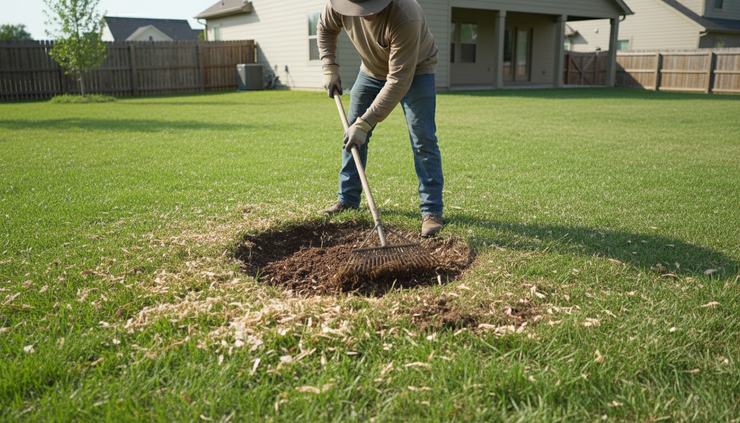
Can you plant grass over a ground stump?
Yes, grass can grow over a ground stump if the area is prepared correctly. The key is to avoid planting directly into a thick layer of wood chips.
For seed or sod, the area should have a healthy top layer of soil. Grass roots need soil contact, moisture, and nutrients. Too much woody material near the surface can dry out quickly and break down unevenly.
For better results after landscaping after stump grinding, use this simple approach:
Remove the loose mound of excess grindings
Fill the hole with clean topsoil
Level the area slightly higher than the surrounding lawn
Seed and cover lightly, or install sod
Water consistently while the grass establishes
Add soil later if the area settles
Sod is often the fastest way to make the spot look finished. Seed costs less and works well when the area is small or when the surrounding lawn is already being overseeded.
A ground stump area may settle over time. That is normal. If a dip appears later, add topsoil and seed again.
Can you plant a new tree in the same spot?
Planting a new tree in the exact same spot is not ideal after basic stump grinding. The old roots and remaining underground wood can interfere with the new root ball. The soil may also settle as the old material decays.
If you want another tree, the better choice is usually to plant a few feet away from the old stump location. That gives the new tree cleaner soil and better room to establish.
If the new tree must go in the same exact spot, full stump removal or deeper excavation may be needed.
Cost factors for grinding and removal
Stump removal cost can vary widely because every site is different. The biggest factor is not just the stump itself. Access, cleanup, and the finished plan all matter.
Common cost factors include:
Stump diameter
Stump height
Tree species and wood hardness
Number of stumps
Access for equipment
Rocks, fencing, slopes, or tight spaces
Grinding depth
Surface roots
Cleanup and hauling
Backfilling or lawn repair
Grinding is usually less expensive than full removal because it takes less labor and causes less disruption. Full removal often requires heavier work, more repair, and more soil replacement.
If tree work is already being done, it may be more efficient to schedule tree removal and stump grinding together. The crew can plan access, debris handling, and cleanup as one project.
For larger jobs, such as storm cleanup or multiple removals, bundling trimming, removal, grinding, and site cleanup can reduce repeat trips and help the yard recover faster.

When stump grinding makes the most sense
Grinding is the right fit for most residential yards where the goal is to remove the eyesore and make the area usable again.
Choose stump grinding when:
You want the stump gone from view
You need to mow safely over the area
You plan to plant grass or install sod
You want less yard disturbance
The stump is not in a future construction area
You are comfortable letting roots decay naturally
You want a practical balance of cost and results
Grinding is especially useful in established lawns where tearing out the root ball would create more damage than the stump is causing.
It also works well for planting beds. Once the stump is ground, the area can often be reshaped with soil, edging, mulch, perennials, or shrubs, as long as large roots do not interfere with planting.
When full stump removal makes the most sense
Full removal is the better option when underground wood will create a real problem later.
Choose full stump removal when:
A hardscape feature will go over the area
You need a clean excavation zone
A new tree must be planted in the same spot
The root ball is lifting nearby structures
Major grading is already planned
Leaving roots behind would interfere with the project
Removal may also make sense for small ornamental tree stumps where the root ball is manageable. For large mature trees, removal becomes more disruptive and may require more restoration.
If the tree was close to a driveway, patio, retaining wall, or utility area, get professional guidance before deciding. Roots and underground obstacles can complicate the job.
A simple way to decide
For most yards, the choice comes down to what will happen in that spot next.
Choose stump grinding
Choose full stump removal
Best for lawns, mulch beds, general cleanup, mowing access, and lower disruption.
Best for construction, hardscaping, exact-site replanting, and major grading work.
If the area only needs to look good and function as part of the yard, grinding is usually enough. If the ground needs to be clear below the surface, removal is the safer choice.
Frequently asked questions
Is it better to grind or remove a stump?
Stump grinding is better for most yards because it removes the visible stump with less mess and less lawn damage. Full removal is better when you need the entire root ball gone for construction, hardscaping, or planting a new tree in the same exact spot.
Do roots die after stump grinding?
Yes. Once the tree is removed and the stump is ground, the roots no longer have a living tree to support. They decay underground over time. Large roots may take years to fully break down.
Can you plant grass over a ground stump?
Yes, if the area is prepared with clean topsoil. Do not rely on a thick layer of wood chips as the planting surface. Remove excess grindings, add soil, level the area, and then seed or sod.
How deep does stump grinding go?
Grinding depth depends on the machine, stump, site conditions, and future use of the area. Many lawn projects only need the stump ground several inches below grade. Deeper grinding may be requested for sod, grading, or landscaping.
How long does a stump take to decay?
An untreated stump can take several years to decay, and large stumps can last much longer. Grinding speeds up the visual cleanup, but the underground roots still break down naturally over time.

The best choice for a Minnesota yard
Stump grinding is usually the best answer when you want a clean yard, easier mowing, and a practical path to new grass or landscaping. It handles the visible stump without turning a large part of the lawn into an excavation site.
Full stump removal is the right call when the underground root ball cannot stay, especially before construction, hardscaping, or exact-site replanting.
The smartest move is to decide based on the next use of the space. Grass, mulch, and general yard repair usually point to grinding. Building, digging, and structural work point to removal.
JC Landscaping provides tree removal, stump grinding, trimming, and site cleanup throughout the North Metro. Call 763-242-0803 for an estimate.


Comments